Christmas production of Nativity at the NAC has hits and misses… and then more misses

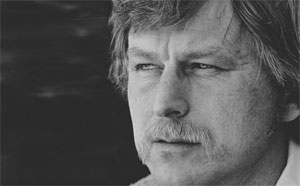
Nativity: Réjean Cournoyer as Herod
Peter Anderson’s Nativity is a recapitulation of the nativity story as seen in the mystery plays of the early Medieval English theatre, rewritten and restaged to present this material to a contemporary audience. The original texts were some of the most widely seen public entertainment in Britain, so there’s no shortage of fun material to work with.
King Herod’s first scene, for instance, is a wonderfully written bit of villainous scene-chewing. The traditional figure of Herod leaps so far into his comic evil and arrogance that he brings up the house lights and stops the show. It’s a terrific way of bringing the play into focus as a public spectacle, not simply a passive experience. Nativity tries to break into our space in other ways, but nothing is more successful than having a character simply “turning off” the show. It helps that Réjean Cournoyer’s Herod was one of the best things in the show – a wondrous, loudmouthed, long-striding creep and perfect jester.
As a whole, though, and to put it as gently as possible, Nativity is confused. The two main stories were thrown into a pot together and the mix never really gelled. The play is written in alternating rhyming couplets, which can feel archaic to modern ears even if you appreciate its historical origins, especially when the rhyme is sometimes forced.
The angel characters were dressed in slinky white gowns and perform as 1950s doo-wop girls, but I honestly wasn’t sure why. Why doo-wop? Since none of the songs were doo-wop, it was less whimsical than just odd. And the songs are so simply arranged that even two-part harmonies become an interesting divergence, while the lyrics sound like they are drawn from psalms, giving the whole thing a Sunday school feeling. I love musicals, and assumed there would be more effort put into the music of something billed as a musical comedy.
Occasionally in the show jokes are presented, but with no actual, textual joke included. Like when a modern Mary gives birth and declares “it’s a girl” and the audience laughs for no other reason than that it’s supposed to be a joke. Or worse: Often a gay-themed joke will be nothing more than the fact that the character “acts gay.” The play wasn’t specifically trying to make fun of gay characters, but I still felt uncomfortable with the implication, and with the largely middle-aged audience’s easy laughter. Was I completely off my nut to be slightly offended by this? I was saved from my doubt by the look of distaste in my guest’s face. Ottawa lost a few points with me that night. And a few more when the standing ovation happened.
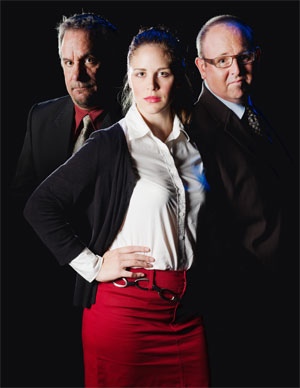
The hard part about saying how little I enjoyed this play is that the amount of talent on that stage is huge. The actors are game, skilled and beautifully committed. Diane D’Aquila and Alex McCooeye were wonderful. Michael Blake and Randi Helmers are great singers. And I finally had the privilege of seeing Robert Persichini perform in person. I just wish I’d seen them all in a different show.
As appeared in the Ottawa XPress Dec 16, 2010:
http://www.ottawaxpress.ca/stage/stage.aspx?iIDArticle=20974