Photo of Occupy Philly by Kaytee Riek

About Public Consultation: An Interview with Mass LBP

In any subject of endeavour the basics are always the same: you get the best output from the best input. In literature you start with the original texts; science has the controlled experiment; in engineering you work with the best materials you can get your hands on. In public policy the highest quality raw material is that most elusive of political realities: the voiced opinion of an engaged and informed group. Some days you might be convinced that there’s a lack of anything like a reasonable apparatus for citizen contact: that either the patrician class uses public consultation for cynical manipulation, to cloak their already-made-up minds in a fake legitimacy; or that citizens sometimes don’t rise above apathy. So as public policy practitioners, who do we turn to to provide us with this critical service?

Seen and Heard: Ontario Minister Eric Hoskins on Preparing Ontario’s Economy for the Future

Over a two-course lunch in a meeting hall overlooking Toronto’s financial district, Ontario Minister of Economic Development, Trade and Employment Eric Hoskins spoke at length about the direction our province’s economic development should take. The audience was a small crowd of maybe a hundred members and invitees hosted by the Toronto Board of Trade. The Board of Trade is a cooperative body that represents the interests of about 10,000 businesses in the Toronto area, which collectively account for “20% of the GDP of the country as a whole,” as the Minister pointed out.

by Dylan Passmore

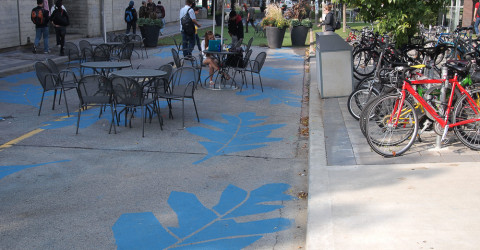
Redefining Spaces: Three innovative methods of using public space

The role a city plays in the life of a citizen is a central one. A country can work to define the overarching politics of a person – can make them look at the world through a particular lens or contemplate their place in it. But a municipality makes the critical political decisions that touch your life in the most intimate way. In a real sense the city is the clothes that you wear, the water you drink, the food you eat; buildings and taxes, streetcars and school zones. That’s the attitude I had when I sat down in a drafty event room at the Harbourfront Center to hear Ed Keenan and Ivor Tossell host a panel called “Toronto Talks: The Future of our City”.

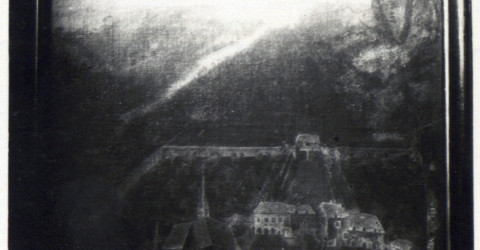
"Abbaye de Marche" from the Ghent University Library

How Silence Works: Emailed Conversations With Four Trappist Monks

About two months ago I started reaching out by email to a group of people whose lives I wanted to know about and understand: The Trappist monks of Oka Abbey, in Quebec. Oka Abbey is the oldest Trappist monastery in North America. A century ago, it was a powerhouse; but in recent decades, the community had dwindled to a fraction of what it used to be. After leaving the Abbey to a heritage group, to be preserved as an historical site, the remaining monks relocated to a smaller retreat in the mountains north of Montreal.

Even if you’re not Catholic, you may have heard of the Trappists. They’re the monks that make those impeccably crafted beers. And the Trappist monks of Oka created a cheese worth drooling over that’s still widely sold today (though now it’s made by a Quebec dairy company). The Trappists are known for one other thing as well: they’re the only Western-based monastic order that still actively practices the “vow” of silence. (I put quotes there because neither the Rule of St. Benedict nor the practice of the Order actually contains a specific vow of silence. As I understand it, it’s an edict, a practice that’s a part of their lives that the monks happily follow.) It was this element of their lives, their dedication to the enshrinement of silence, that drew me to them. Not really knowing how one goes about approaching monks, I located list of monasteries in addition to the former Oka group and started emailing. It took a few weeks of very slow introductions to find the right people, but I ended up in conversation with four monks, two in America and two in Canada.

I was nervous; a lapsed Catholic who chased his ideals into a long education, I have a weakness to people who devote themselves more than I ever did to higher pursuits. But I found the group to be more than usually friendly, loathe to judge, voluble in writing and full of enthusiasm to correspond. They’d write me in the spare time they had between their daily work and daily prayer, most seeming pleased. Most asked that I respect their privacy, so their names have been removed here. This conversation was culled from four different interviews conducted using the same starting questions.


Speed-the-Plow: A Hollywood story

David Mamet is unquestionably one of the heavy-hitters of contemporary theatre, and perhaps even contemporary literature as a whole. Over the past 30 years his name has become synonymous with a kind of stylized writing that is carefully, artfully structured in order to seem natural. If you find that characterization contradictory, imagine him as the verbal and aural equivalent of Impressionist painting. If a friend describes something as “like Mamet,” he means that the characters speak in short, powerful bursts, each overlapping and interrupting each other to create a sort of haze of words from which slips every now and then a slash of beauty.

Rhodes scholar

W.H. Auden once described a poem as “a well-made verbal object.” Brilliantly, Auden wanted us to realize that the poem is not a catalogue of something, but is in fact a creation made out of the material of language. The most tedious poets are invariably the ones who forget this, and bury the crafting of language under gimmickry or confessional melodrama. At the other end of the spectrum are authors like Shane Rhodes.