Autopoesis and Public Policy

Autopoiesis is a fascinating word.

Poiesis literally means “to make” or “fabricate” in ancient greek, and serves as the root for words like poetry, and other words related to production or formation. In the 70s a biologist coined the term autopoiesis to refer to any biological system that given the correct components, will act to maintain or reproduce itself. The term was loosely used in the sciences, but took on a slightly better life when people fleshed-out the symbolism of the word, and started applying it in social science contexts


The Government’s Failure Paradox

When we look back on the previous few days of turmoil it is tempting to feel that events are spinning faster and faster: the announcement of Canadian military action; the senseless deaths of a soldier in Quebec and a reservist in Ottawa. Now comes the moment of rhetorical strangeness, with Canadians at the eye of a storm of opinions. In the midst of all these media voices and citizen questions, the highly qualified members of our Federal Government will need to decide what their response to our situation will be.

The Misvaluing of the Humanities in the Policy Realm

Originally published in the Public Policy and Governance Review Online

Two weeks ago, New York Times columnist Nicholas Kristof extolled the virtues the humanities bring to a civil and progressive society; which is fair, just, and absolutely correct. The humanities should be extolled as that branch of human endeavour that gives shape and heft to the rest of political society. However, Kristof’s column also inadvertently displayed the poverty of current thinking about the value of arts and culture.

Photo of Occupy Philly by Kaytee Riek

About Public Consultation: An Interview with Mass LBP

In any subject of endeavour the basics are always the same: you get the best output from the best input. In literature you start with the original texts; science has the controlled experiment; in engineering you work with the best materials you can get your hands on. In public policy the highest quality raw material is that most elusive of political realities: the voiced opinion of an engaged and informed group. Some days you might be convinced that there’s a lack of anything like a reasonable apparatus for citizen contact: that either the patrician class uses public consultation for cynical manipulation, to cloak their already-made-up minds in a fake legitimacy; or that citizens sometimes don’t rise above apathy. So as public policy practitioners, who do we turn to to provide us with this critical service?

Seen and Heard: Ontario Minister Eric Hoskins on Preparing Ontario’s Economy for the Future

Over a two-course lunch in a meeting hall overlooking Toronto’s financial district, Ontario Minister of Economic Development, Trade and Employment Eric Hoskins spoke at length about the direction our province’s economic development should take. The audience was a small crowd of maybe a hundred members and invitees hosted by the Toronto Board of Trade. The Board of Trade is a cooperative body that represents the interests of about 10,000 businesses in the Toronto area, which collectively account for “20% of the GDP of the country as a whole,” as the Minister pointed out.

by Dylan Passmore

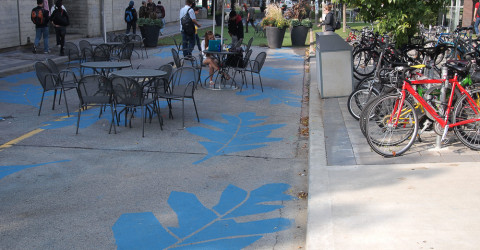
Redefining Spaces: Three innovative methods of using public space

The role a city plays in the life of a citizen is a central one. A country can work to define the overarching politics of a person – can make them look at the world through a particular lens or contemplate their place in it. But a municipality makes the critical political decisions that touch your life in the most intimate way. In a real sense the city is the clothes that you wear, the water you drink, the food you eat; buildings and taxes, streetcars and school zones. That’s the attitude I had when I sat down in a drafty event room at the Harbourfront Center to hear Ed Keenan and Ivor Tossell host a panel called “Toronto Talks: The Future of our City”.