Photo of Occupy Philly by Kaytee Riek

About Public Consultation: An Interview with Mass LBP

In any subject of endeavour the basics are always the same: you get the best output from the best input. In literature you start with the original texts; science has the controlled experiment; in engineering you work with the best materials you can get your hands on. In public policy the highest quality raw material is that most elusive of political realities: the voiced opinion of an engaged and informed group. Some days you might be convinced that there’s a lack of anything like a reasonable apparatus for citizen contact: that either the patrician class uses public consultation for cynical manipulation, to cloak their already-made-up minds in a fake legitimacy; or that citizens sometimes don’t rise above apathy. So as public policy practitioners, who do we turn to to provide us with this critical service?

Seen and Heard: Ontario Minister Eric Hoskins on Preparing Ontario’s Economy for the Future

Over a two-course lunch in a meeting hall overlooking Toronto’s financial district, Ontario Minister of Economic Development, Trade and Employment Eric Hoskins spoke at length about the direction our province’s economic development should take. The audience was a small crowd of maybe a hundred members and invitees hosted by the Toronto Board of Trade. The Board of Trade is a cooperative body that represents the interests of about 10,000 businesses in the Toronto area, which collectively account for “20% of the GDP of the country as a whole,” as the Minister pointed out.

by Dylan Passmore

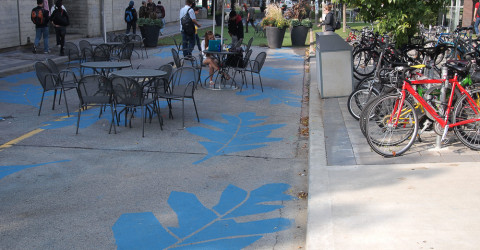
Redefining Spaces: Three innovative methods of using public space

The role a city plays in the life of a citizen is a central one. A country can work to define the overarching politics of a person – can make them look at the world through a particular lens or contemplate their place in it. But a municipality makes the critical political decisions that touch your life in the most intimate way. In a real sense the city is the clothes that you wear, the water you drink, the food you eat; buildings and taxes, streetcars and school zones. That’s the attitude I had when I sat down in a drafty event room at the Harbourfront Center to hear Ed Keenan and Ivor Tossell host a panel called “Toronto Talks: The Future of our City”.

photo by Peter Morgan

The State and Impact of Canadian Arts and Culture Funding

The role Government plays in shaping the culture of a country is an uncertain one. On the one hand is the critical importance of forming a coherent fabric with which to build common values, and on the other is the danger that something critically important to the happiness and unity of a country is treated with a venal cynicism, as a political tool.

In every economic downturn the arts and culture sector is the first on the chopping block, and suffers a more severe proportional blow than any other. After all, even in surplus years it’s a favoured pastime in Canadian politicking for arts funding to be publicly denounced and the resulting projects ridiculed. But in this latest wave of austerity, the Harper Government showed a planned vision for the future of Canadian arts and culture – one that we as a society will hopefully learn to reject.

The 2012 Federal Budget shows a planned budgetary reduction of 191 million dollars between now and 2015. But it is the distribution of these reductions that are more telling than any amount of money.